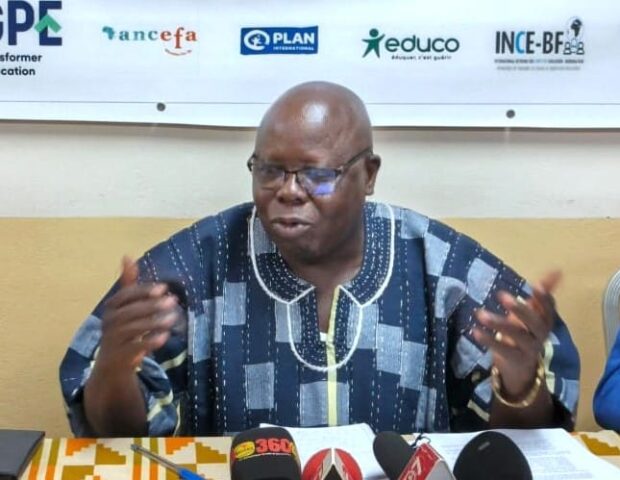
On 5 May 2026, the National Coalition for Education for All of Burkina Faso (CN‑EPT/BF) launched Global Action Week for Education (GAWE) 2026 in Ouagadougou. This takes place against the backdrop of the replenishment campaign of the Global Partnership for Education (GPE) for the 2026-2030 period. Within this international dynamic, national actors are seeking to mobilise greater and more sustainable resources to support education systems, particularly in low‑ and middle‑income countries.
In Burkina Faso, GAWE has become an important space for bringing together public authorities, civil society, teachers’ unions, communities, and technical partners around key issues of access, quality, and financing. The campaign’s focus this year on sustainable financing highlights the need to move towards more predictable, domestically driven, and equity‑oriented investments in education.
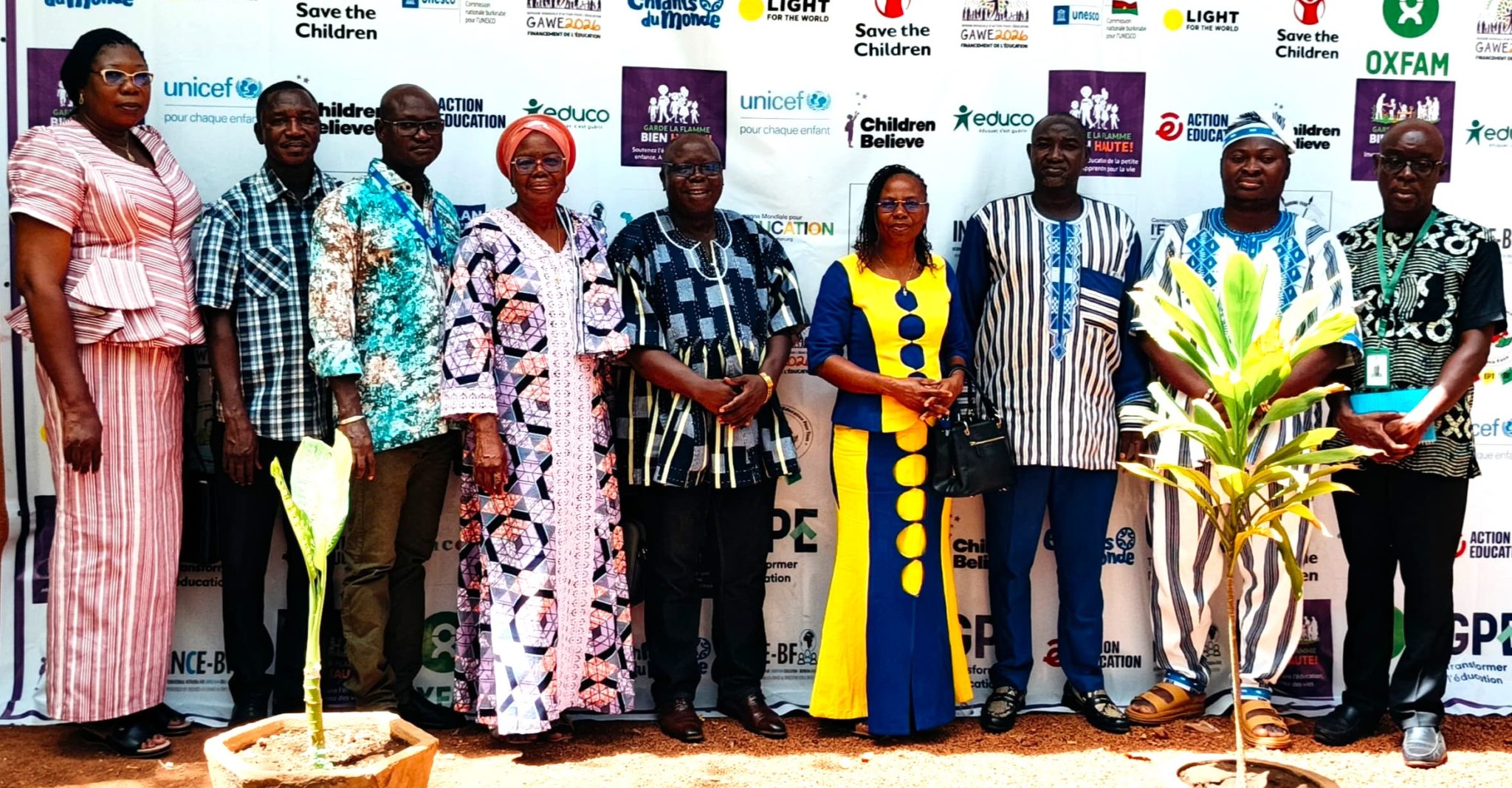
With less than five years to go to the 2030 deadline for Sustainable Development Goal 4 (SDG 4), the promise of inclusive and equitable quality education is still far from being realised for many children in Burkina Faso. This year, GAWE unfolds in a complex context of overlapping crises and constrained public budgets, but also in the wake of renewed international debates on the future of education financing. As countries and donors prepare for the next GPE replenishment, Burkinabè actors are using GAWE as a national platform to assess progress in implementing the Education and Training Sector Plan 2017-2030, in line with SDG 4.
Despite significant budgetary efforts by the state, the education sector continues to face major challenges. Completion rates remain low at several levels of schooling, while many children, particularly girls, rural learners, displaced children, and those living with disabilities, still struggle to enter, remain, and succeed in school. Opportunities in technical and vocational education are too limited, even though young people urgently need pathways into decent work and livelihoods. As CN‑EPT/BF’s coordinator, Tahirou Traoré, underlined at the launch, these figures represent children who walk long distances only to find overcrowded classrooms, young people who abandon their studies for lack of support, and families who continue to see education as a fragile promise rather than a guaranteed right.
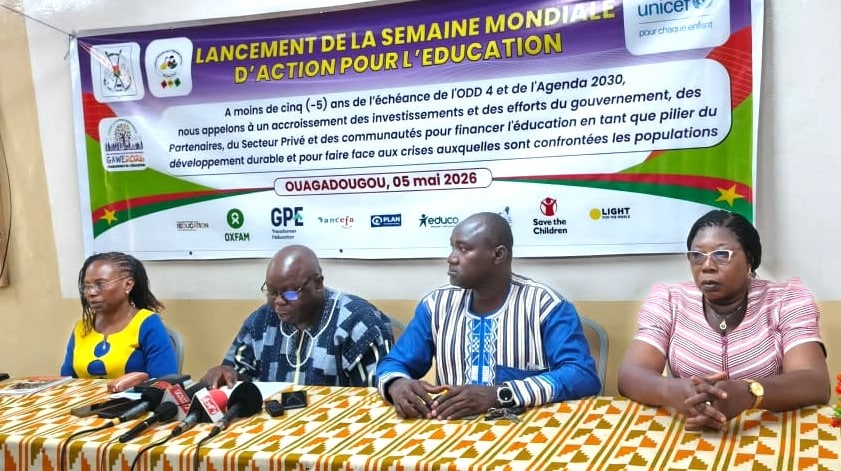
For CN‑EPT/BF, GAWE 2026 is a call to deepen political dialogue and to increase domestic, sustainable financing for education. The coalition stresses that education must be treated as a long‑term public investment, capable of driving social cohesion, economic transformation, and resilience in the face of multiple crises. The campaign in Burkina Faso therefore aims to promote concrete solutions to improve governance, transparency, and the efficiency of education spending, while ensuring that resources are directed first to the most marginalised learners.
Activities planned as part of GAWE 2026 will run from May to July across the country’s 13 regions, involving a wide range of education stakeholders. Through debates, public events, media actions, and community‑level initiatives, organisers hope to generate collective commitment to an education system that is accessible, inclusive, and responsive to Burkina Faso’s realities.
Audio message on GAWE 2026
In this audio soundbite (in French), Tahirou Traoré of the National Coalition for Education for All of Burkina Faso (CN‑EPT/BF) speaks about the importance of education in the country as communities, partners, and authorities come together for GAWE 2026. Against a backdrop of low completion rates and persistent barriers to learning, he calls for renewed political will and increased domestic financing so that every child can access quality education by 2030.
Click HERE to read the transcription of the audio in English.
Click to read articles (in French) about CN‑EPT/BF and GAWE 2026 on the following digital news platforms – Nouvelles Infos and Burkina24.