
The world is far off track to meet the Sustainable Development Goals (SDGs) by 2030, with progress slowing, stalling, or even reversing in many countries amid overlapping crises of poverty, inequality, climate vulnerability, conflict, and waning multilateralism. On its current trajectory, the world will not achieve any of the 17 SDGs, and education is among the most at risk. Projections show that only 17% of SDG 4 targets will likely be reached, with significant regression on SDG 4.5, which commits governments to eliminate gender disparities and ensure equal access to all levels of education. This means the promise to “leave no one behind” is already being broken for millions of learners, especially girls, children in poverty, learners with disabilities, and those in conflict-affected and remote areas.
Against this backdrop, the Global Campaign for Education (GCE) and partners convened a virtual side event to the 2026 ECOSOC Financing for Development (FfD) Forum, titled ‘One last push to finance SDG 4: Inclusive, Equitable and Quality Education and Lifelong Learning for All – Education as a Critical Enabler for Peace, Social Justice and all other SDGs’. Held on 22 April 2026 during Global Action Week for Education (GAWE), the event called on world leaders to reform the global financial architecture and invest boldly in public education as a political and ethical obligation, not an optional cost.
Education as a political choice and a peace imperative
Opening the event, GCE President Refat Sabbah stressed that education financing “is not merely a technical or financial matter; it is a political decision that reflects state priorities and values.” When governments decide where to allocate scarce resources, they are in reality choosing between people or “instruments of control,” and between investing in the future or managing permanent crisis. Cuts to education do not just mean fewer schools or teachers; they reproduce poverty, widen social inequalities, and weaken the resilience societies.

GCE and its members reiterated their belief that education is a critical enabler of peace, social cohesion, gender justice and all other SDGs, building more inclusive and peaceful societies, challenging discrimination, and breaking cycles of violence. UN Secretary General António Guterres’ own warning to the 2026 FfD Forum, that governments are spending more “on instruments of death than the foundations of development and peace”, framed the discussion on the stark trade offs between rising military budgets and underfunded public services.
GCE Global Coordinator Grant Kasowanjete highlighted that more than 260 million children remain out of school, largely because of inequitable financing, and stressed that education budgets must be designed to confront inequality, ensure quality, and withstand economic shocks. He argued that every unit of currency invested in education reduces future costs in unemployment, crime and poor health, making equitable, sustainable, and efficient financing central to any development strategy.
Broken promises and structural barriers to SDG 4
Former UN Special Rapporteur on the Right to Education Vernor Muñoz presented GCE’s monitoring of the Transforming Education Summit (TES) education financing track, warning that TES has become “another example of promises made and broken.” He noted that children in low income countries receive just a fraction of what is spent per learner in wealthy OECD nations, and that UNICEF projects a sharp decline in education funding by 2026, which could push the number of out of school children from 272 million to 278 million.
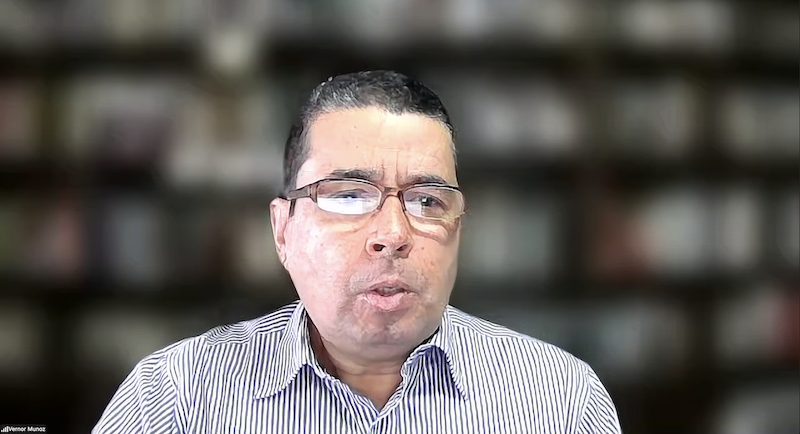
Vernor located the education financing crisis in deeper structural injustices such as persistent colonial power relations reproduced through debt conditionalities, austerity, and an international financial architecture that deprives countries in the Global South of the resources they need for strong public education systems. International financial institutions such as the World Bank and IMF continue to promote austerity and social spending cuts, while corporate tax avoidance and evasion drain revenues that could fund schools, teachers, and students. At the same time, military spending is surging, with defence investments vastly outpacing capital investment in education, emphasising that today’s funding gaps are the product of deliberate political and economic choices.
Regional realities: Austerity, debt, and privatisation
Speakers from the Asia Pacific, the Arab region, Africa, Latin America and the Caribbean detailed how global dynamics translate into concrete national and regional crises for education financing.
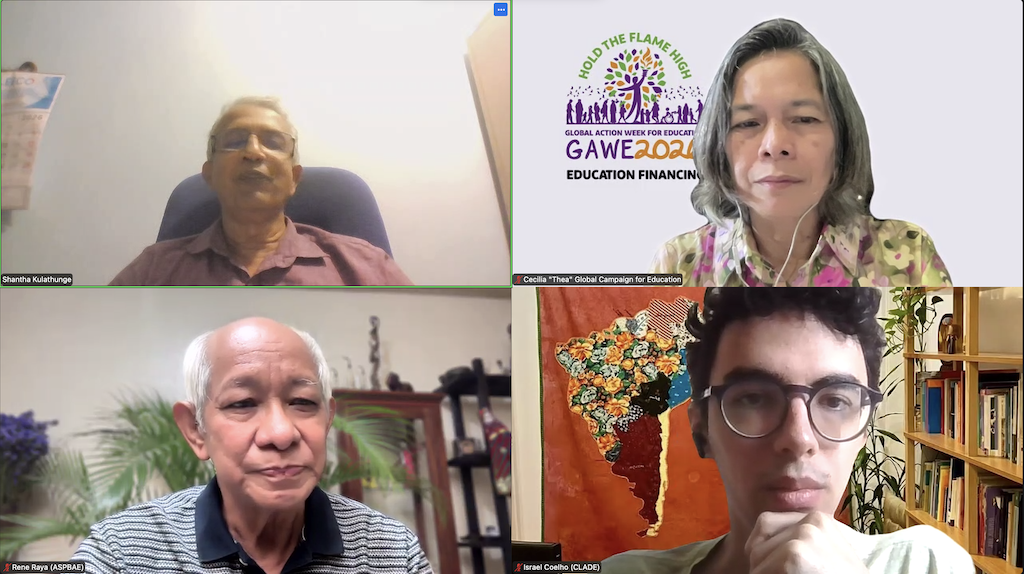
In the Asia Pacific, ASPBAE’s Rene Raya described a region that is economically dynamic yet still home to half the world’s poorest people and the largest concentration of youth and adult illiterates, with persistent gender disparities and high numbers of out of school children and youth. Despite growth, many countries in South and Southeast Asia are among the lowest spenders on education relative to GDP, and the Asia Pacific has become the most privatised education region globally, as public underinvestment opens space for commercial providers.
In Sri Lanka, Shantha Kulathunge of the Coalition for Education Development (CED Sri Lanka) showed how economic mismanagement, tax giveaways, and a severe debt crisis triggered IMF backed austerity, pushing the country to default and forcing deep cuts in social spending, including education. Education’s share of GDP is about 2%, far below the 6% demanded by civil society, and a new Public Financial Management Act caps primary expenditure at 13% of GDP, effectively locking in low education spending for years to come.
From the Arab region, Kamal Messaoui of the Tunisia National Education Coalition highlighted the twin pressures of chronic under financing and war, leading to severe setbacks in public education, huge numbers of children out of school, and growing privatisation, as private actors step into weakened public systems. Conflicts in places such as Gaza, Lebanon and Sudan are exacerbating fiscal crises and eroding states’ ability to guarantee the right to education.
Speaking on Africa, Tahirou Traoré of the Coalition Nationale our l’Education Pour Tous du Burkina Faso (CN-EPT/BF) emphasised that many African countries are failing to meet the commitment to allocate at least 20% of national budgets or 4-6% of GDP to education, even as debt service consumes an ever larger share of public resources. A large proportion of African countries spend more on servicing debt than on education or health, while low tax to GDP ratios and massive losses from tax evasion undermine domestic resource mobilisation.
In Latin America and the Caribbean, CLADE’s Israel Quirino connected education financing to tax justice, illustrating how regressive tax systems and tax avoidance by the super rich deprive states of the resources needed for quality public education. He noted that a modest progressive tax on individuals with over one million dollars in assets could generate billions annually, enough to fund education for millions of students, while in Honduras, losses from tax evasion and avoidance far exceed current education spending.
Together, these testimonies showed how austerity, debt distress, regressive tax regimes, and privatisation are widening the financing gap and pushing the most marginalised learners further behind.
Changing the rules: Tax justice, debt relief, and global reform
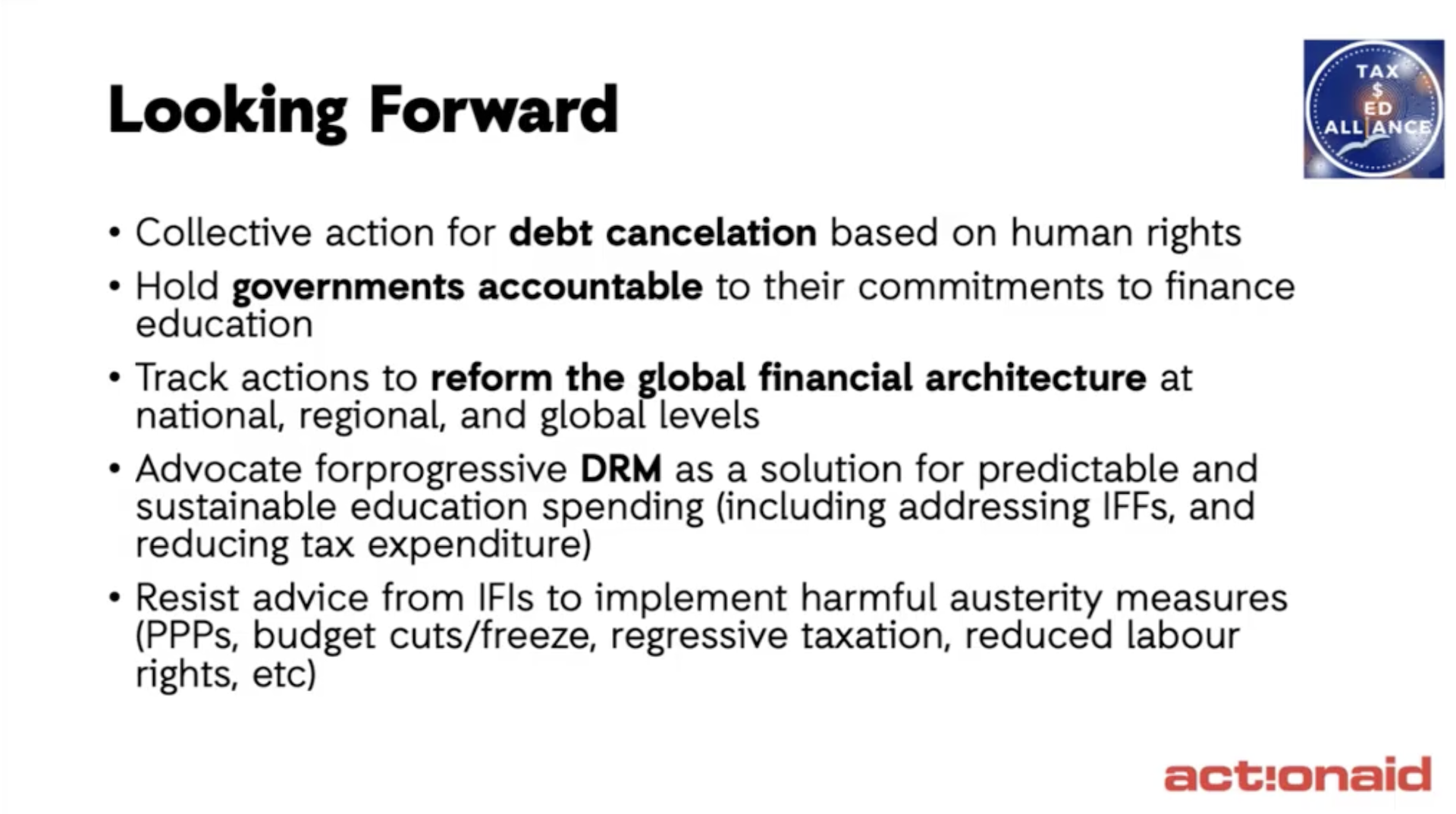
A central theme of the side event was the urgent need to overhaul the global financial and tax architecture so that education and other essential public services can be sustainably financed. Speakers from the TaxEd Alliance, Tax Justice Network, and national education coalitions highlighted the emerging UN Framework Convention on International Tax Cooperation (“UN Tax Convention”) as a historic opportunity to shift tax rule making from exclusive clubs towards a more inclusive, UN led process.
Ucizi Ngulube of the TaxEd Alliance explained how countries like Zambia face a double squeeze of falling education budgets, rising debt servicing, and huge revenue losses from tax incentives and profit shifting by multinational corporations, often encouraged by international financial institutions in the name of investment and private sector led growth. Civil society is therefore pushing for progressive domestic resource mobilisation, resistance to regressive taxes such as VAT hikes, and stronger safeguards against austerity conditions that undermine social spending.
Bernice Mpere Gyeke from the Ghana National Education Campaign Coalition shared reflections from the UN Tax Convention negotiations in Nairobi, stressing that tax justice is central to education equity and that developing countries must have a stronger voice in designing global tax rules. She underlined the need for fair allocation of taxing rights, attention to digital economies, and action on illicit financial flows, as well as the critical role of national education coalitions in linking global tax debates to concrete demands for increased, equitable education budgets at home.
The event also took note of new initiatives like the Borrowers’ Platform launched during the IMF-World Bank Spring Meetings, while cautioning that coordination and capacity building will not be enough without deeper reforms, including a UN Convention on Sovereign Debt to secure fair, transparent, and rights based approaches to debt cancellation and restructuring.
A shared agenda for action
To summarise the discussions, Cecilia “Thea” Soriano of GCE reiterated the common agenda and actions calling on governments and the international community to:
- Reform the international financial architecture so that it is participatory, inclusive, and transformative, guided by sustainable development and human rights rather than narrow fiscal targets.
- Address structural drivers of the education financing gap, including tax abuse, illicit financial flows, pervasive corruption, and declining development assistance.
- Strengthen public investment in essential services – especially public education, health and social protection – through equitable, inclusive, and sustainable financing, grounded in tax justice and robust domestic resource mobilisation.
- Set specific targets and ring fence resources for the most marginalised and excluded groups, including those in rural, remote, and conflict affected areas, as well as learners facing gender, disability or socio economic discrimination.
- Ensure transparent, inclusive, and gender responsive public budgeting, with strong accountability and active participation of civil society, teachers’ unions, youth, and communities.
- Scrutinise so called “innovative” financing schemes and public private partnerships to ensure they strengthen rather than undermine public systems, uphold human rights, and avoid corporate capture of education.
- Meet longstanding commitments on Official Development Assistance (ODA), with donor countries allocating at least 0.7% of GNI to ODA and giving adequate priority to education, health, climate action and social protection.
As GCE’s Global Action Week for Education 2026 rallies under the banner “Hold the Flame High,” civil society is signalling that time is running out to deliver on SDG 4, but that one last concerted push, grounded in tax justice, debt justice, and courageous political choices, can still secure the right to inclusive, equitable, quality education and lifelong learning for all.
You can view the full video of the virtual side event here –