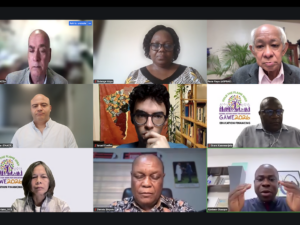
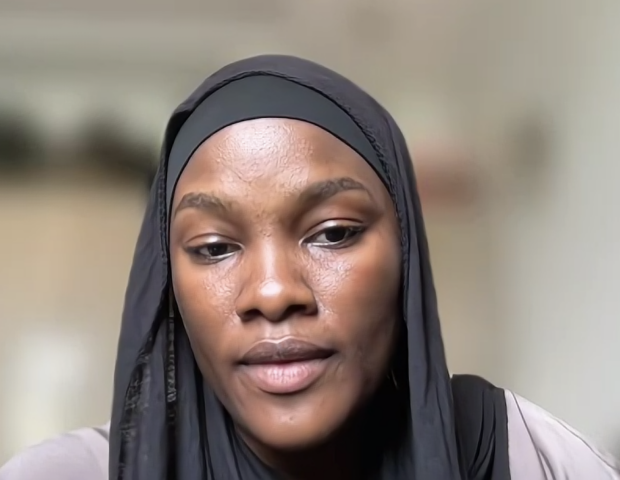
Young activists from across the world came together virtually on 23 April for the Global Action Week for Education (GAWE) 2026 youth webinar.
The event formed part of GCE’s 24th annual global campaign to advance the right to education for all. Under the 2026 theme on education financing, young speakers addressed how shrinking education budgets, debt, austerity, and an unfair global financial system are undermining progress towards SDG 4 and widening inequalities. Throughout the session, participants reaffirmed that underfunding is not simply a resource gap, but a structural injustice rooted in political choices and failed priorities.
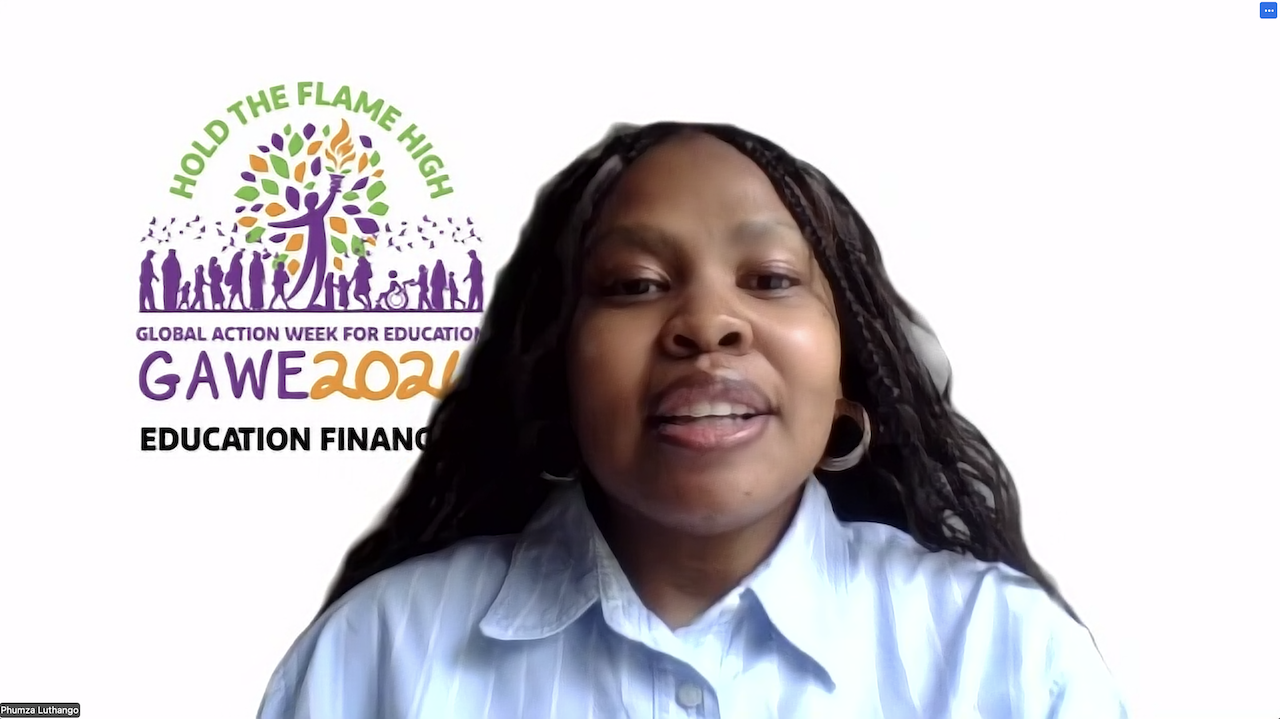
Moderated by GCE’s Phumza Luthango, the webinar brought together youth leaders from Africa, Latin America and the Caribbean, Asia, and the Middle East, as well as contributions coordinated through GCE’s Youth Action Group and regional partners.
Key interventions included:
- Jon Kafuko of Youth for Tax Justice Network highlighted how international tax rules, illicit financial flows, and weak global tax governance drain billions that could be used to fund quality public education, and called for strong youth participation in the UN Tax Convention process.
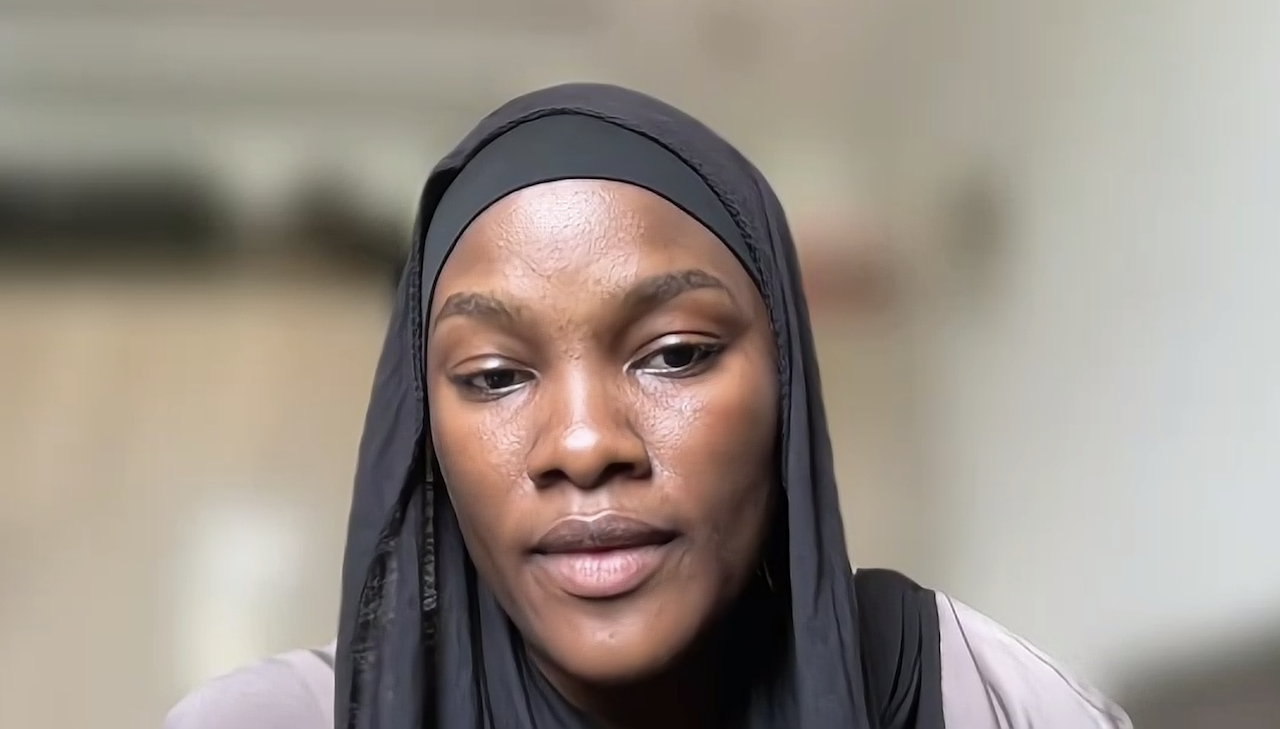
- Maryam Bello of Telika Youth Organisation spoke on financing education for gender equality in Africa and stressed that “the financing gap is a gender gap”. She urged governments to invest in gender-transformative education that reflects girls’ realities, livelihoods, and dignity rather than treating them as instruments of economic growth.
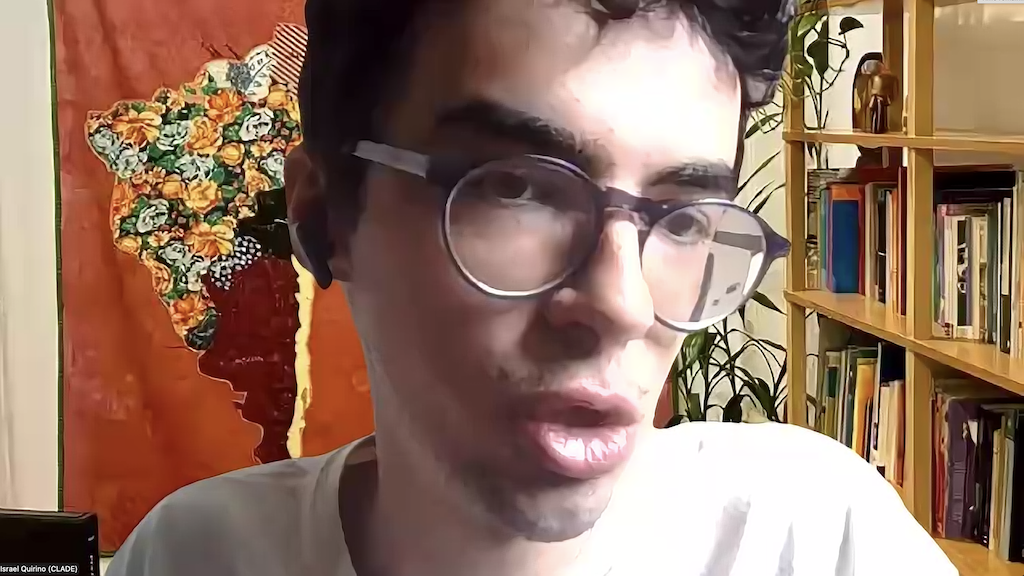
- Israel Quirino of the CLADE youth group (Latin America) linked education financing to climate justice and demanded progressive, fair tax systems, and global measures against tax evasion so that resources can be redirected to resilient, public education systems that respond to the climate emergency.
- Amarazya Tumurbaata of the Mongolian Youth Council shared experiences from the “Know Your Budget, Track Your Budget” campaign and demonstrating how corruption, delayed capital projects, and weak budget transparency directly translate into overcrowded classrooms and restricted access to education.
- Nawal AI Sayed of ACES youth spoke from an Arab-region perspective on education in times of war and crisis, and insisted that “the problem is not lack of resources, but priorities” as military spending is favoured over education in public budgets.
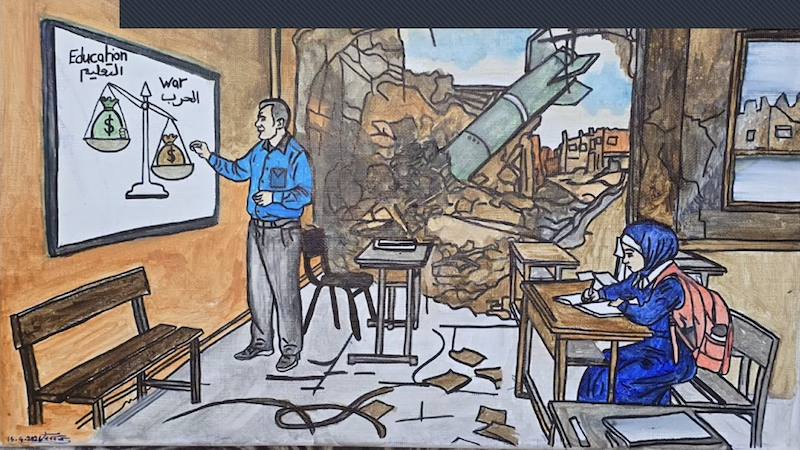
Visual arts, poetry, and youth-produced videos from GCE coalitions and youth networks illustrated the human impact of global financial pressures on learners, teachers, and communities, and showed how creative expression is being used as an advocacy tool towards UN human rights processes.
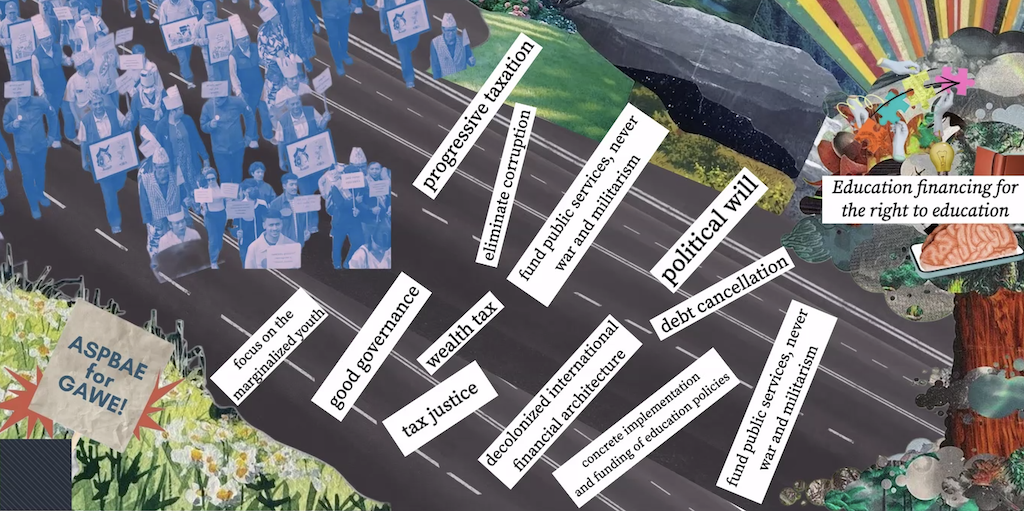
Throughout the event, young speakers echoed GAWE 2026’s four core objectives: accountability to SDG 4; increased and just financing for quality public education; deep global financial reform; and broad public mobilisation to defend education as a public good.
They called on governments to:
- Reach and exceed international benchmarks for education spending and protect education budgets from austerity and debt-driven cuts.
- Champion international tax justice and debt cancellation so that countries have the fiscal space to fund inclusive, gender-transformative, and climate-just public education systems.
- Treat education financing as a long-term investment in rights, peace, and equality, rather than a discretionary cost that can be postponed in times of crisis.
The webinar also encouraged youth to engage actively in national budget processes, global tax negotiations, and the replenishment of key global education funds, including the Global Partnership for Education (GPE) and Education Cannot Wait through research, campaigning, and direct advocacy with parliamentarians and embassies.

GCE and its youth members will continue to hold the flame high for education, keeping pressure on decision-makers to fund education, not war; public good, not private profit.
Youth Protecting the Right to Learn in Times of Economic Crisis
The below short video message by Olasupo Abideen Opeyemi from Brain Builders Youth Development Initiative (BBYDI) highlights how rising costs and economic hardship in Nigeria are turning school attendance into a daily struggle for many families, with girls particularly at risk of dropping out and facing early marriage and long-term disadvantage. Drawing on community research in Kwara State, Nigeria, BBYDI shows how financial pressures are undermining learning continuity and student wellbeing, while also presenting its efforts to support access to education, digital inclusion, and safe learning environments. Abideen underlines that global financial pressures are visible in empty classrooms and missed opportunities, and stresses that if education is to remain a right, it must be actively protected in times of economic crisis.
You can also view the full video recording of the webinar on GCE’s YouTube channel –