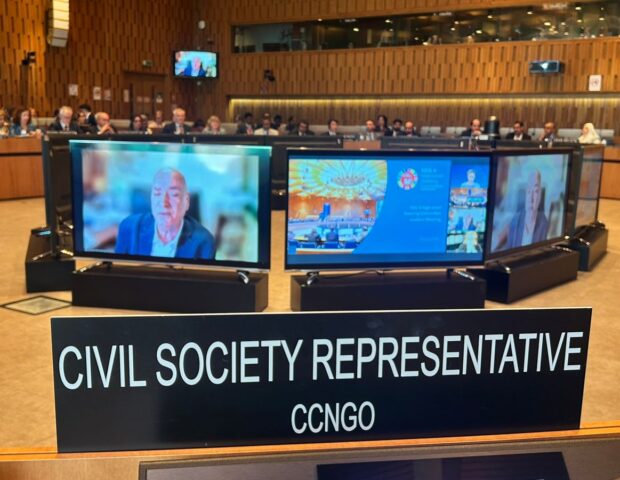
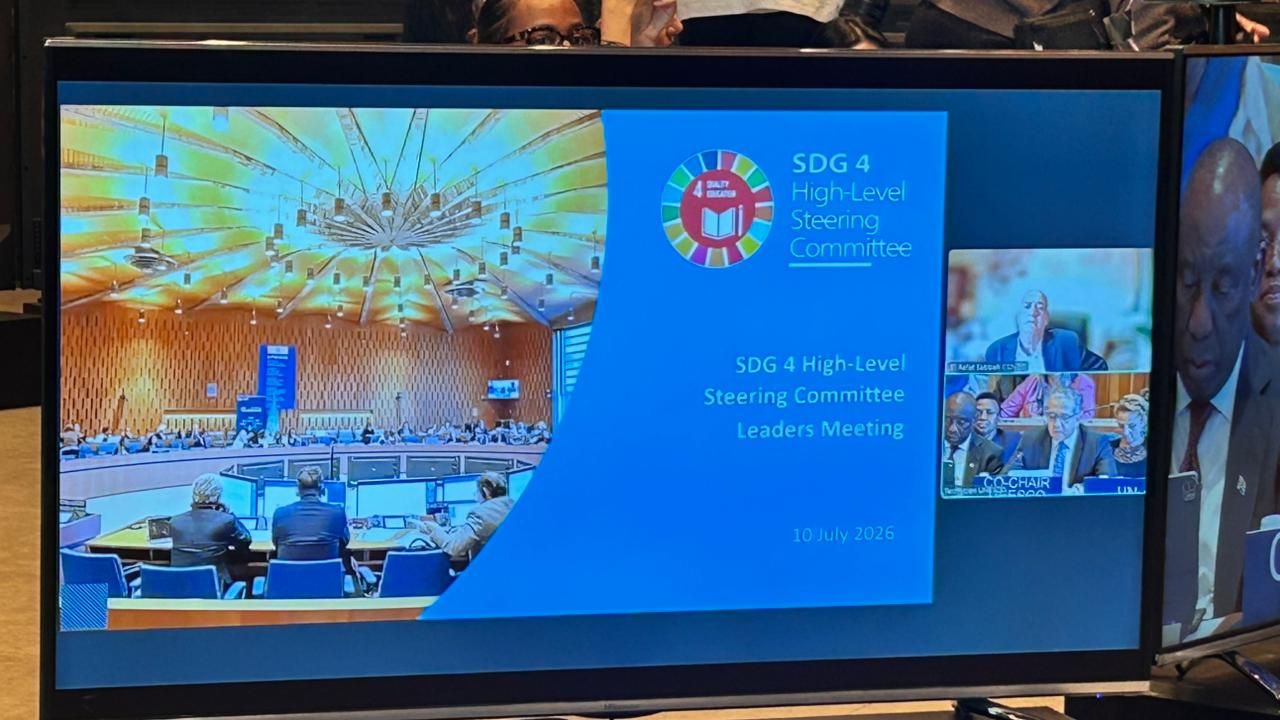
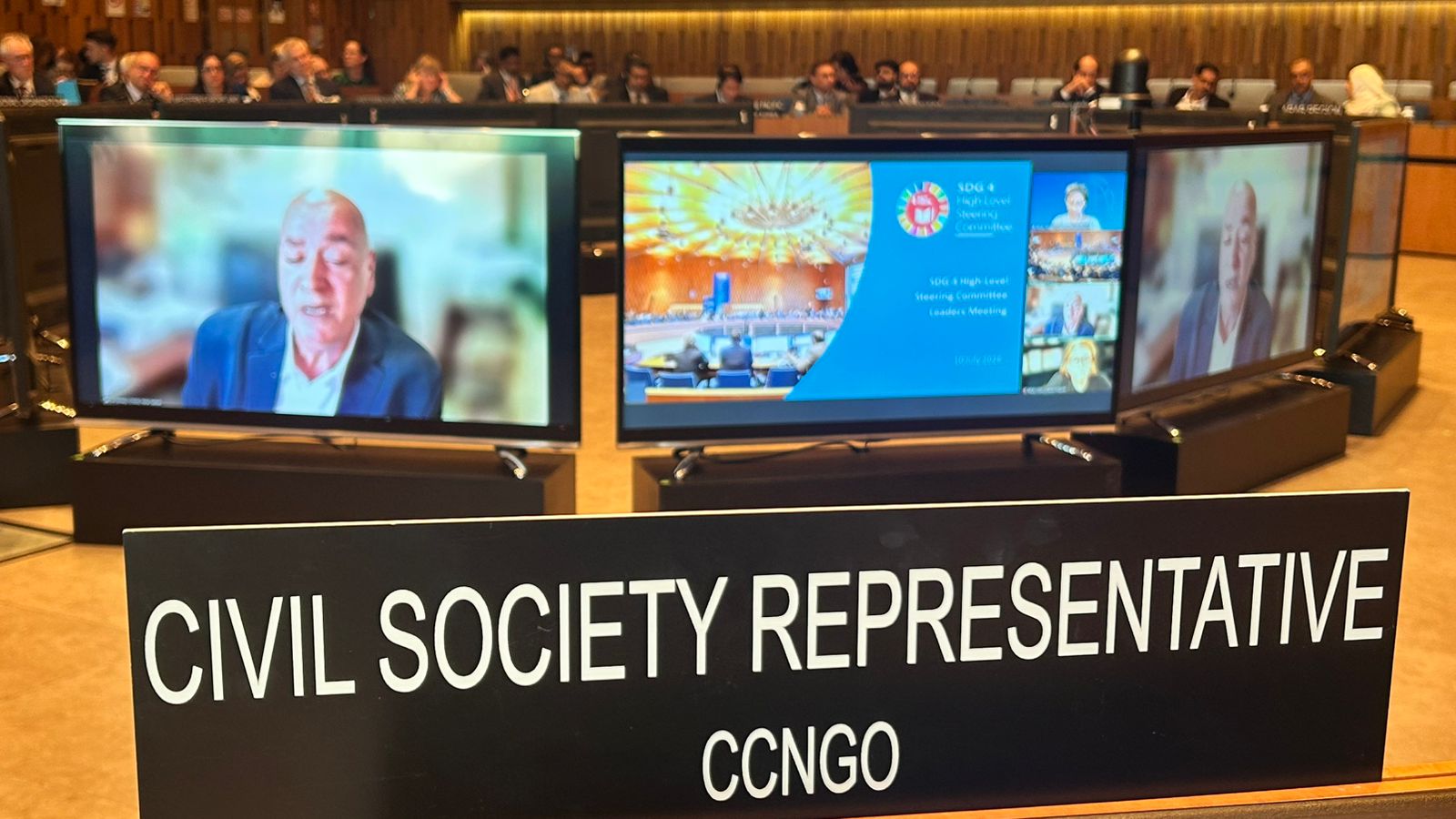
On 10 July 2026, GCE President Refat Sabbah delivered an intervention at the SDG4 High-Level Steering Committee (HLSC) Leaders Meeting, speaking on behalf of the Collective Consultation of NGOs on Education 2030 (CCNGO ED2030) constituency.
Addressing ministers and global education leaders, he called for stronger political leadership and coordination at global, regional, and national levels to accelerate progress on SDG4 in the remaining years to 2030 and to shape a post-2030 education agenda firmly rooted in human rights, equity, and lifelong learning.
Prioritising those furthest behind
Refat underlined that resilient education systems must deliberately prioritise marginalised groups, “last-mile” learners and communities, and those furthest behind. He emphasised the importance of long-term, locally grounded strategies developed and implemented in partnership with civil society organisations, youth, and teachers, as well as flexible learning pathways that span formal, non-formal, and informal education.
Public financing as the cornerstone
Reiterating GCE’s long-standing position, he stressed that public financing remains the cornerstone of equitable and sustainable education systems. No meaningful transformation, he noted, will be possible without sufficient, stable, and sustainable public funding for education that is fully aligned with the right to education and with the obligation of states as primary duty bearers. In this regard, he highlighted the need for the Sustainable Financing Pathways Framework to be firmly anchored in a rights-based approach.
Shaping the post-2030 agenda
Looking beyond 2030, Refat called for inclusive and robust consultative processes to define the future global education agenda. He urged member states and partners to respond to the critical question of how education systems can be transformed to become more inclusive, collaborative, progressive, and liberating, and how they can contribute to more peaceful, inclusive, and sustainable futures for all.
GCE and the CCNGO ED2030 constituency will continue to advocate for strengthened public education systems that place the most marginalised at the centre and uphold education as a fundamental human right.