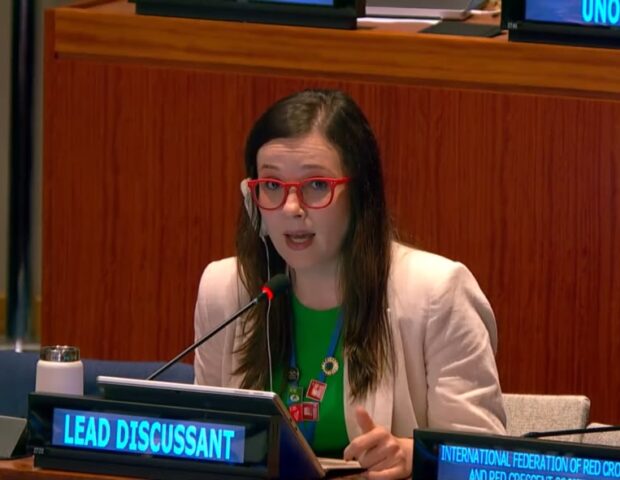
At the UN High‑Level Political Forum on Sustainable Development (HLPF 2026) in New York, Andressa Pellanda demanded tax justice, debt relief, and a renewed priority for education.
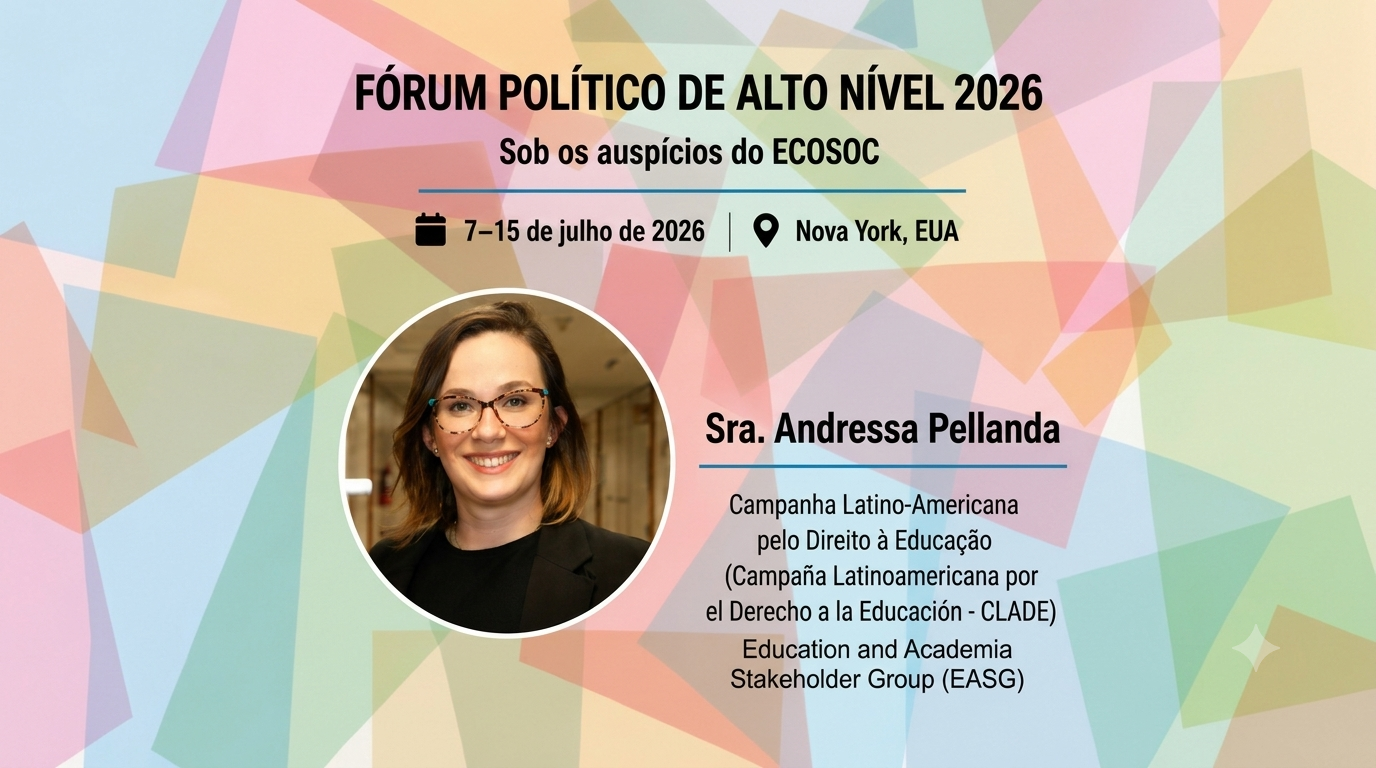
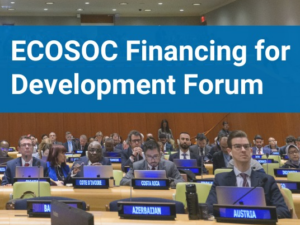
On Wednesday, 8 July, at United Nations headquarters in New York, Andressa Pellanda, General Coordinator of the Brazilian Campaign for the Right to Education, presented a new development model for middle‑income countries during a thematic session of the HLPF 2026.
Speaking on behalf of the Latin American Campaign for the Right to Education (CLADE) and the Education and Academia Stakeholder Group, Pellanda argued that Gross Domestic Product (GDP) is not enough to measure development in these countries. She called for a fairer international financial architecture built on reducing inequalities, advancing tax justice, and strengthening public financing for social rights, with public education at the centre.
The Brazilian Campaign for the Right to Education is also a member of the 2030 Agenda Working Group.
You can view Andressa’s speech here –
Read the full text of the speech below –
Distinguished Chair, representatives of Member States, ladies and gentlemen,
The figures are unequivocal: Middle-Income Countries (MICs) account for 73% of the world’s population and 40% of global economic output, yet they are home to 62% of the world’s poor. This reveals our first truth – that a middle-income economy does not mean a moderately developed society.
Brazil, my country, is a striking example. It is the world’s tenth-largest economy, yet ranks fifth in terms of inequality. These divisions, present in many MICs such as Argentina, Colombia, Mexico, Algeria, South Africa, China, India, the Philippines and others, are rooted in inequalities of class, race, gender, and territory, and are exacerbated by debt servicing.
We need automatic mechanisms to suspend debt repayments, a fair distribution of the burden, and broader eligibility criteria for MICs that rely on private capital. Opaque criteria have already cost African countries up to US$74.5 billion — funds that could finance housing, schools, and hospitals, and strengthen climate resilience.
This leads us to an inescapable conclusion that GDP is incapable of capturing the reality of the MICs. It is the poverty of rights that defines underdevelopment. We need to place multidimensional indicators, such as the Human Development Index (HDI) and the Social Progress Index, at the centre.
If people drive the economy, the economy must serve people and the planet. At present, it is always the most vulnerable populations who pay the price. We need a new paradigm that integrates economic, social, and environmental dimensions.
MICs have a dual role to overcome their own predatory practices and to offer solutions based on our diverse experiences and traditional knowledge. Domestic tax justice is the first frontier. Bold reforms ensure that those who benefit most contribute fairly to the collective well-being. MICs can serve as laboratories for this justice.
MICs can no longer be mere recipients of policies devised elsewhere. We are central actors in a renewed and truly inclusive multilateralism. Reform of the Security Council, the revitalisation of the General Assembly, and the strengthening of ECOSOC are indispensable. Developed countries, which built their wealth through colonisation, have a historical responsibility to lead this process, not out of charity, but out of reparative justice.
Finally, the right to education is a great equaliser. It is the driving force behind creativity and democracy. However, public investment in education is declining. MICs must prioritise education in their national plans, ensuring adequate funding, the valuing of education professionals, and access to quality education for all.
Your Excellencies, the challenges are immense, but they can be overcome. MICs have a historic opportunity to redefine global development through courage, solidarity, and a commitment to justice.
To developed countries: take the lead on a decolonial agenda. In less than a month, this venue will host the Fifth Session of the Intergovernmental Negotiations for the United Nations Framework Convention on International Tax Cooperation. Reform the international financial architecture, expand concessional financing, promote technology transfer, and put an end to debt-imposed austerity. Cancel unsustainable debts, not out of pity, but in the name of peace and prosperity.
To MICs: let us claim our place at the table whilst doing our part, overcoming inequalities through fair tax systems, combating all forms of discrimination, and investing in our people and our planet, especially through education.
Together, let us measure development not by the size of the economy, but by quality of life, the guarantee of rights, and the sustainability of the planet.
Thank you very much.