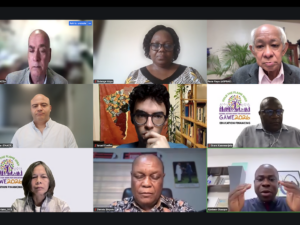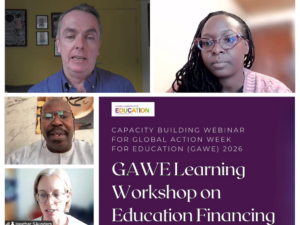
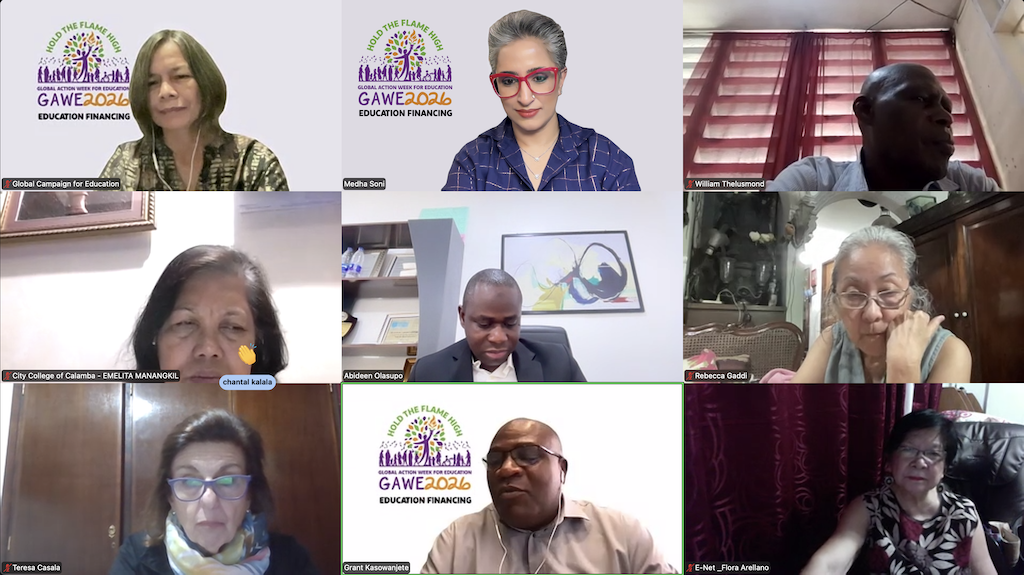
The Global Campaign for Education (GCE) opened the 24th Global Action Week for Education (GAWE 2026) with a virtual launch on 20 April 2026, bringing together hundreds of activists, youth, teachers’ unions, coalitions, donors, and UN partners from across all regions. Held under the theme of education financing and the rallying call “Hold the Flame High for Education,” the launch underlined that in a time of wars, debt crises, austerity, and climate breakdown, defending public education budgets has become both an emergency and a justice issue, not a technical debate.
Opening the event, GCE Campaigns and Communications Manager Cecilia ‘Thea’ Soriano reminded participants that GAWE has been a space of shared struggle and solidarity for 24 years, and that this year’s campaign is about standing “strong in demanding the financing of quality public education for all” amid intersecting global crises. GCE President Refat Sabbah stressed that a nearly US$97 billion annual financing gap and the reality that 41% of countries still fail to meet minimum education spending benchmarks are the result of political and economic choices, not inevitability, as many governments now spend more on debt repayment and military budgets than on education.
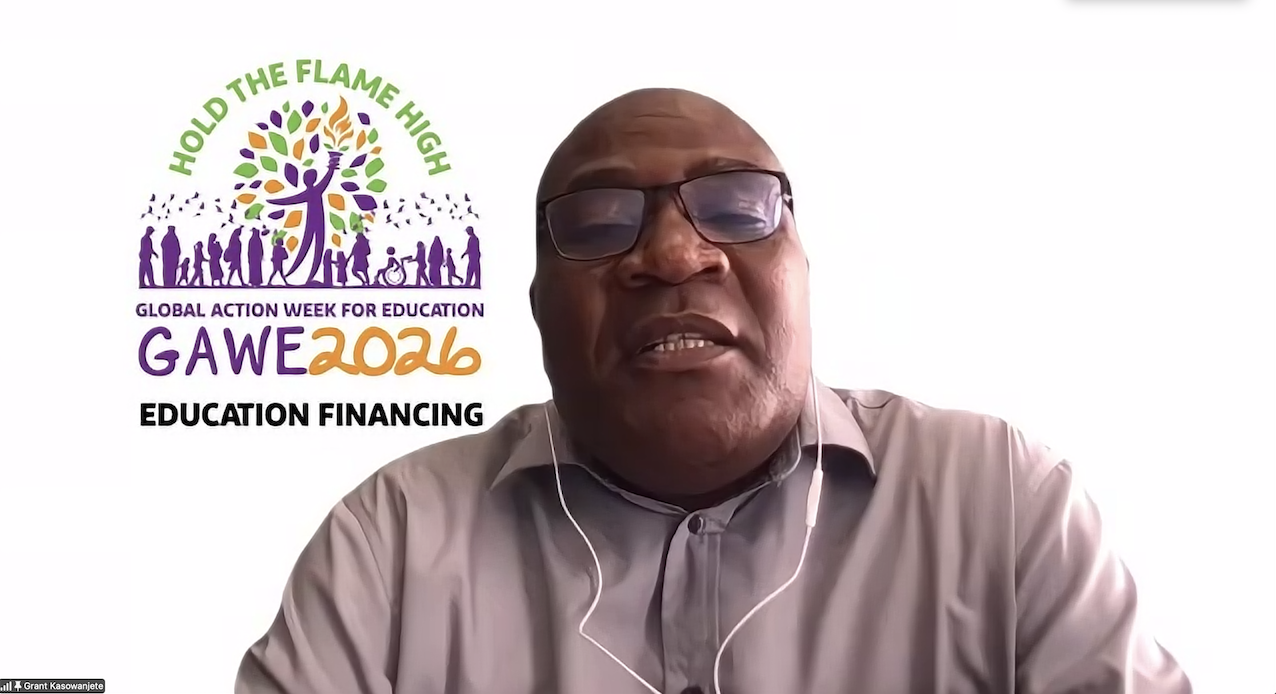
GCE Global Coordinator Grant Kasowanjete set out the four pillars guiding GAWE 2026: accountability for SDG 4 and post‑Transforming Education Summit pledges; defending and financing quality public education against privatisation and “false solutions”; transforming the global financial system through international tax justice and debt cancellation; and mass public mobilisation led by GCE’s 120 member organisations and their constituencies.
Speakers from the Global Partnership for Education (GPE), the UK’s Foreign, Commonwealth and Development Office, the UN Special Rapporteur on the right to education, Education International, Transparency International, and youth networks reinforced these pillars, highlighting how austerity, shrinking fiscal space, and corruption are undermining teachers, excluding marginalised learners, and weakening already fragile systems, especially in conflict‑affected and low‑income countries.
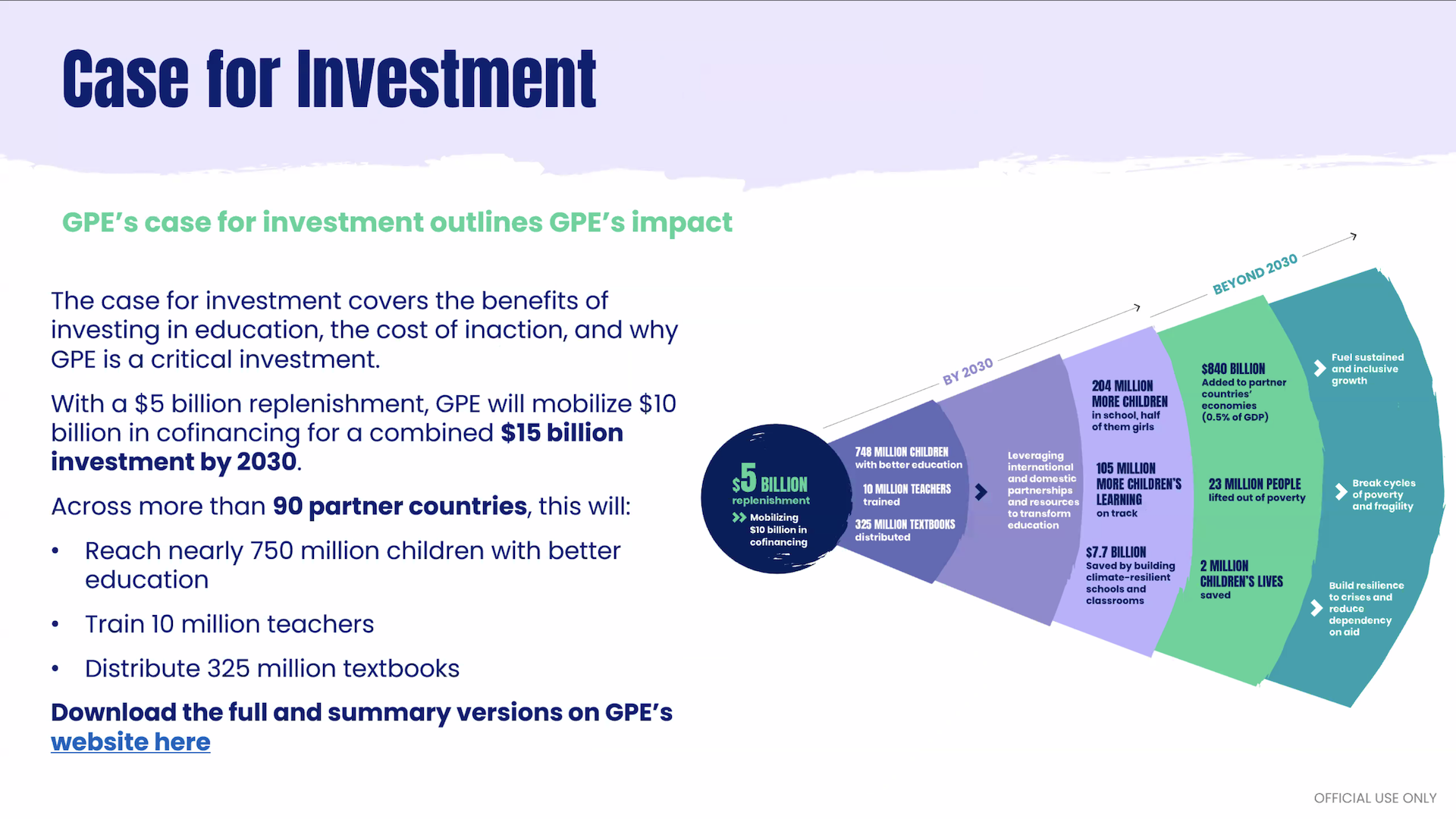
The Global Partnership for Education underlined that its mission is to support sustainable financing for public education and drive long term systems transformation so that domestic and international resources can deliver lasting gains for learners most at risk of being left behind.
The United Kingdom’s Foreign, Commonwealth and Development Office framed its new operating model as a paradigm shift in education financing, moving from a narrow focus on aid volumes towards leveraging public and private finance, system support, and innovative instruments to end long term aid dependency while still protecting the right to quality public education for those most at risk of exclusion.
Youth leaders from Latin America and the Asia-Pacific emphasised that education financing is a question of justice, not charity, and called for sustained investment in inclusive and gender‑transformative public education that dismantles structural barriers facing girls, Indigenous and Afro‑descendant youth, learners with disabilities and those living in poverty or remote areas. Regional solidarity messages from Africa, Latin America and the Caribbean, the Arab region, Asia‑Pacific, Europe and North America, and the international NGO constituency converged around three demands: fund education, not war; resolve the debt crisis and expand fiscal space for public services; and secure both progressive domestic resources and predictable, equitable international financing, including official development assistance, as a matter of global justice and reparation for historical injustices.
GAWE 2026 was also positioned as a key civil society contribution to the UN Special Rapporteur on the right to education’s call for inputs on international financial architecture, debt and education, reinforcing demands for tax justice, debt cancellation, and a rights based, feminist overhaul of global financing rules so that states can expand fiscal space for public education instead of diverting scarce resources to debt service.
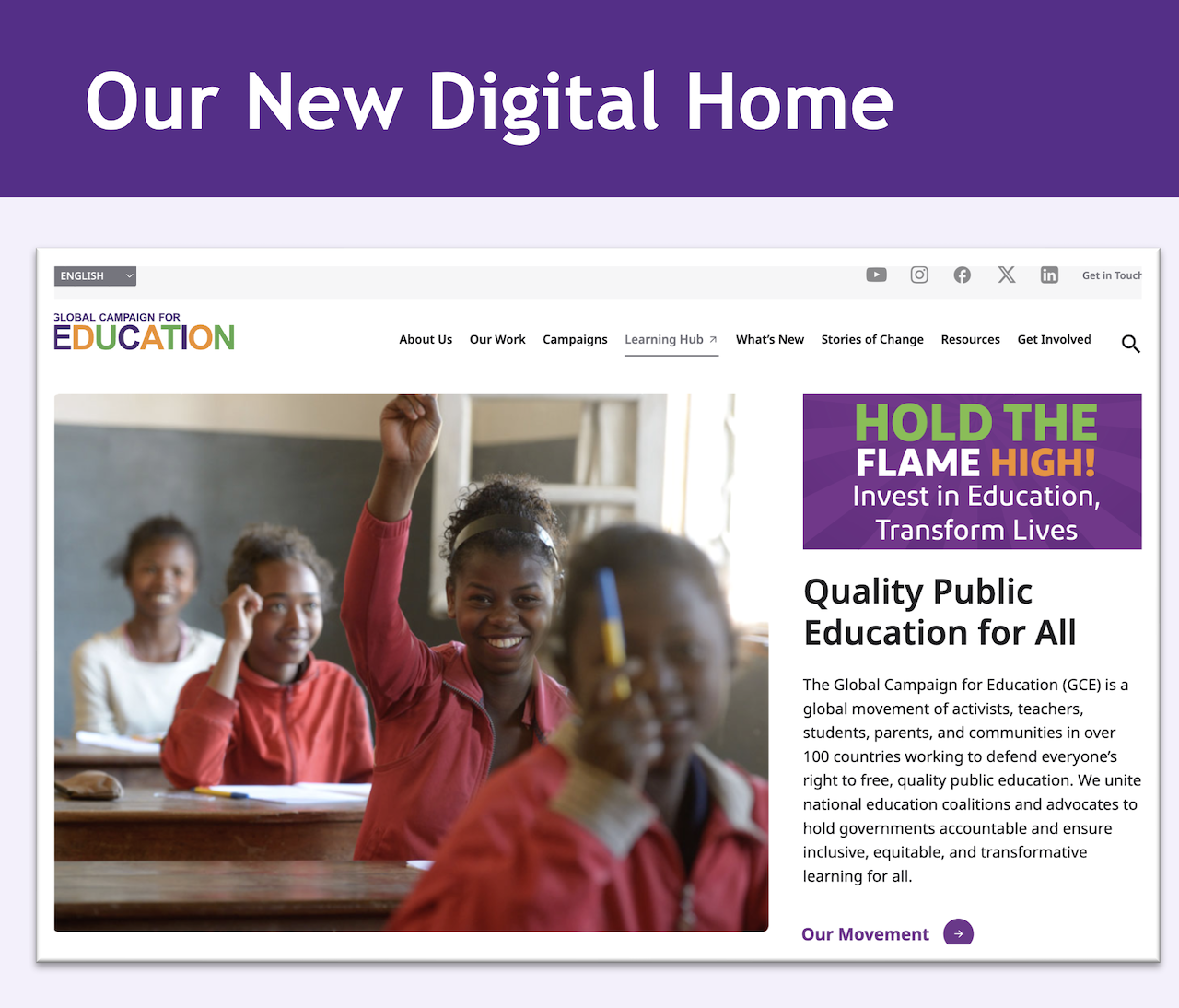
The webinar also showcased tools for action for the week of 20-25 April, including through the launch of GCE’s new multilingual, accessibility‑oriented website – now a central hub for GAWE 2026 materials, an Education Financing Observatory, a learning hub, and youth advocacy resources – positioning the campaign as both a political moment and a long‑term organising space.
Closing the event, GCE invited participants to use GAWE 2026 to intensify national and regional advocacy, “knock on all doors of power”, and keep the flame of public education burning high beyond this week until no child, youth, or adult learner is left behind.
You can watch the full launch event here –