Global Action Week for Education (GAWE) 2026 is shaping up to be one of GCE’s most politically sharp mobilisations, as activists, educators, and youth leaders prepare to “hold the flame high” for education from 20-25 April 2026.
At a virtual GAWE 2026 learning workshop held on 9 April, Cecilia “Thea” Soriano, GCE’s Campaigns and Communications Manager, opened the session by situating GAWE 2026 within a worsening crisis of education financing driven by wars, climate change, shrinking aid, and growing privatisation pressures.
Thea underlined that SDG 4 is suffering from chronic underfunding. There is an annual USD 97 billion shortfall, 41% of countries fail to meet international benchmarks on education spending, and many low‑income countries now spend more on debt repayments than on education. She framed GAWE 2026 around four priorities: (1) exposing the crisis of education financing, (2) demanding increased domestic and ODA investments in quality public education for all, (3) seizing political openings such as the UN Framework Convention on International Tax Cooperation and a prospective UN Convention on Sovereign Debt, and (4) linking financing to broader goals of human rights, peace, gender equality, inclusion, and sustainable development.
Why Domestic Resource Mobilisation Matters
In the first thematic segment, Thea introduced a discussion on why domestic resource mobilisation (DRM) is the cornerstone of sustainable education financing and how “innovative” mechanisms can threaten public education when they prioritise profit over rights. She stressed that fair and progressive tax systems are the lifeblood of public education, yet many governments rely on regressive taxes, tolerate tax abuse, and struggle with weak administration and corruption, all under a global financial architecture tilted towards richer countries.
Campaigns to Sustainably Finance Education
A panel on tax and debt campaigns brought together Ashina Mtsumi, TaxEd Alliance Coordinator; and Catherine Mithia, Policy Research and Advocacy Officer at the UN Convention Sovereign Debt Management.
Ashina showed how many low‑ and middle‑income countries collect less than 15% of GDP in tax – far below the roughly 30% needed to adequately fund rights and public services – and debunked the myth that generous tax holidays are necessary to attract investors, pointing instead to the enormous annual losses from corporate tax abuse and offshore evasion. She urged coalitions to end harmful tax incentives, reform taxation of extractive industries, renegotiate unfair tax treaties, and push for progressive, gender‑responsive tax systems, while engaging actively in the negotiations towards a UN tax convention.

Catherine explained how rising and increasingly commercial debt – often contracted at interest rates two to four times those paid by high‑income countries – is crowding out education, with many governments now spending more on debt servicing than on schooling. She highlighted the damaging effects of austerity conditions tied to International Monetary Fund (IMF) and World Bank loans, which frequently freeze or cut public spending in sectors such as education and health, and called on coalitions to back a UN Convention on Sovereign Debt that would establish transparent, timely, and rights‑based mechanisms for debt resolution.
GPE Replenishment and ODA: Why Multilateralism Still Matters
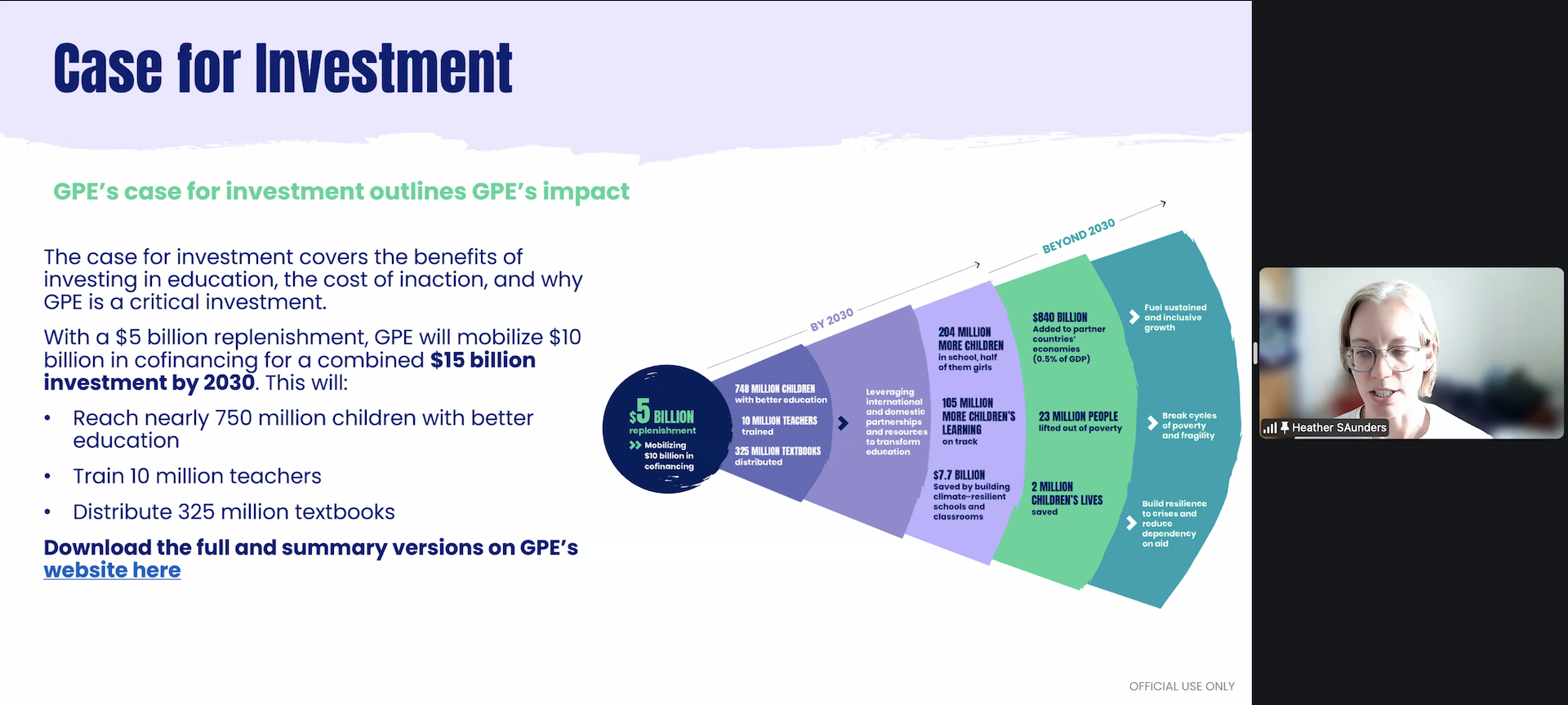
The next session turned to the Global Partnership for Education (GPE) replenishment campaign and the central role of aid in a “Leave No One Behind” education agenda. Heather Saunders, Deputy Team Lead for Global Advocacy at GPE, and Edwin Ikhuoria, Senior Partnership Specialist in GPE’s Global Advocacy Team, gave an overview of the replenishment process, explaining that GPE is seeking 5 billion dollars up to 2030, with the potential to mobilise an additional 10 billion in co‑financing and support hundreds of millions of learners and millions of teachers. They also shared updates on domestic resource mobilisation and country pledges, and encouraged coalitions to see GAWE 2026 as a moment to connect national budget advocacy with calls for donors to increase and better target ODA for education.
A practical strategies segment featured Cheikh Mbow, Executive Director of COSYDEP–Senegal, Joseph Wasikhongo, National Coordinator of Elimu Yetu – Kenya and Joseph Nhan‑O’Reilly, Co‑Founder and Executive Director of the International Parliamentary Network for Education (GCE‑UK). They reflected on previous replenishment cycles, stressing tactics such as coordinated letters and meetings with ministers of education and finance, mobilising parliamentarians, citizen’s mobilisations, leveraging media, and aligning civil society actions with key diplomatic moments to secure stronger pledges.
Children, Youth, and Creative Advocacy
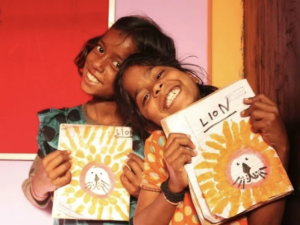
Youth participation and intergenerational organising were highlighted in a segment led by Israel Quirino, Project Officer and Youth Engagement focal point at the Latin American Campaign on the Right to Education (CLADE). Israel linked GAWE 2026 to the UN Special Rapporteur on the right to education’s call for inputs on international financial architecture, debt, and the right to education, inviting coalitions to hold sessions where children and young people can explore these themes and submit drawings, poems, stories, or videos. The aim is to ensure that those most affected by austerity and underfunded schools shape the narrative and political demands of the campaign.
Communications: Telling a Shared Story
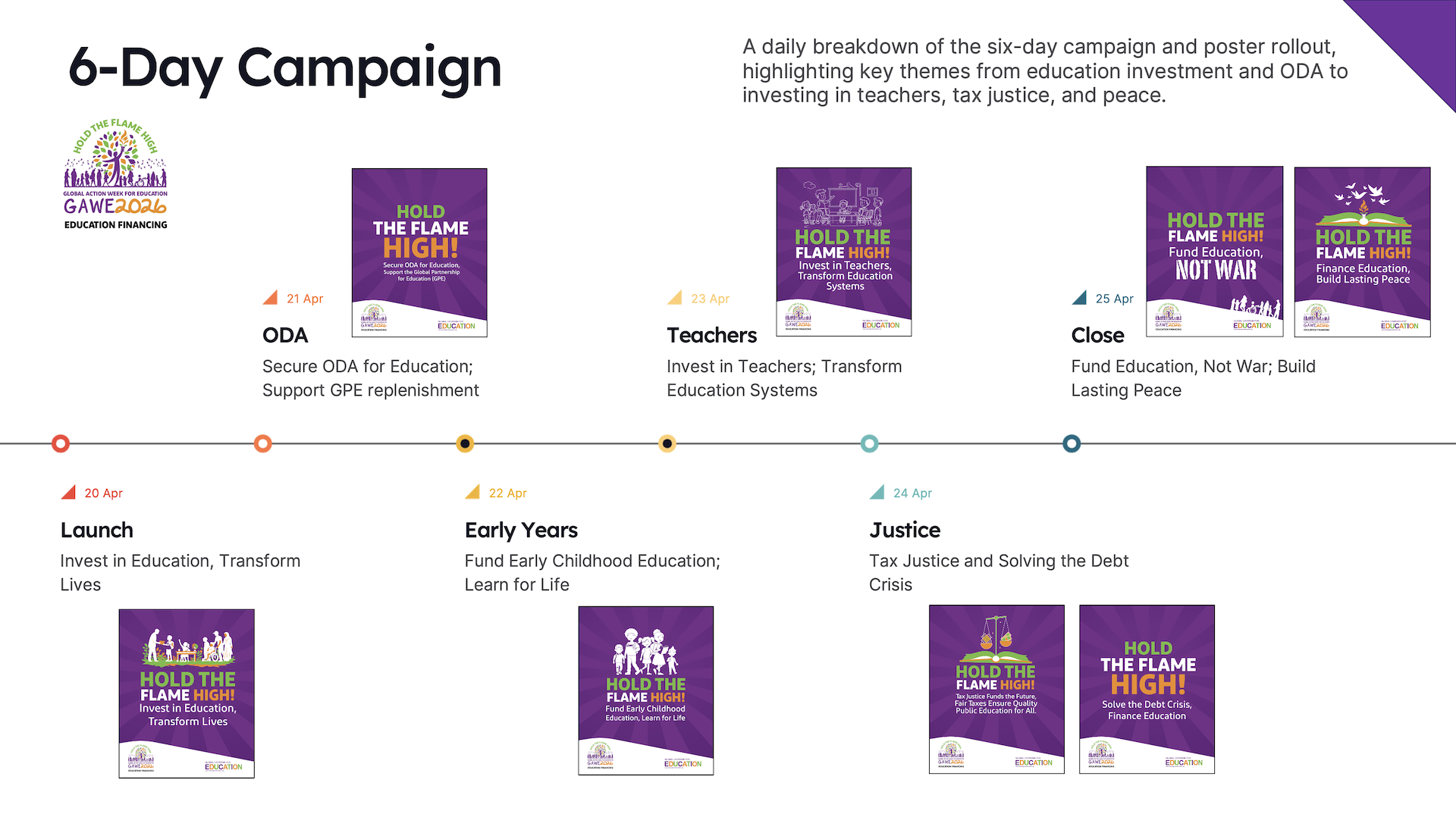
In the final session, GCE’s Communications and Media Officer, Medha Soni, outlined a campaign strategy built around three pillars – education financing as a political choice, defence of quality public education, and a justice‑centred framing linking education to tax, debt, peace, and inequality – and a six‑day narrative presented through posters and social media strategies. Each day will focus on a specific angle, from broad investment messages and ODA/GPE to early childhood education, teachers, tax and debt justice, and the closing call to “Fund education, not war.” Coalitions will be able to use a shared visual identity and multilingual materials, along with common hashtags such as #HoldTheFlameHigh, #GAWE2026, #EducationFinancing, #RightToEducation and #MultiplyPossibility, while tailoring content and actions to their own contexts.
As GAWE 2026 approaches, the workshop emphasised that education financing is not a technical detail but a political choice that will determine whether the promise of education for all is realised or deferred yet again. Through coordinated advocacy on tax and debt, strong public mobilisation, and strategic use of global platforms like the GPE replenishment, GCE members and allies aim to ensure that, this April and beyond, the flame for the right to education burns brighter.