Gender-Transformative Education (GTE) is rapidly emerging as one of the most powerful levers to advance justice for women and girls, but it remains critically underfunded and politically fragile.
Advocates came together to call for stronger action on education and gender equality at the virtual NGO Parallel Event for the 70th session of the UN Commission on the Status of Women (CSW70) titled, Financing Gender Transformative Education as a Pathway to Justice for Women and Girls. They emphasised that if the world is truly committed to ensuring access to justice, it must also commit to financing education that transforms gender norms, not merely expands access.
The event was co-convened by the Global Campaign for Education (GCE), the Arab Campaign for Education for All (ACEA), the Africa Network Campaign on Education for All (ANCEFA), the Asia South Pacific Association for Basic and Adult Education (ASPBAE), and the Latin American Campaign for the Right to Education (CLADE).
Opening the session, co-moderators Lae Santiago, ASPBAE’s Advocacy and Youth Engagement Officer, and Israel Quirino, CLADE Programme Assistant, both members of GCE’s Youth Action Group, framed the discussion within the CSW70 theme on strengthening access to justice for all women and girls. They highlighted an alarming backlash against gender equality, rising violence, including digital violence, and shrinking civic space.
GCE Vice President and CLADE General Coordinator, Nelsy Lizarazo, deepened this framing by setting out six key ideas on why financing GTE is a matter of justice. First, she stressed that there can be no justice without gender justice, and no gender justice without dismantling the gendered barriers embedded in public education systems. Second, she highlighted that millions of children remain out of school and many who attend cannot learn in inclusive, safe environments, while the exclusion of adult women from education opportunities remains largely invisible. Third, she underlined that GTE directly tackles these injustices by creating safe, inclusive learning spaces and enabling girls, adolescents, and all learners to learn in equitable conditions. Fourth, she argued that this requires confronting the deep “matrix” of cultural, social, political, and economic power relations that has, over centuries, normalised discrimination, hierarchies, and subordination, and reshaping the roles imposed on girls and boys alike, including harmful expectations placed on men and boys to be “protectors”. Fifth, she emphasised that teachers and schools themselves must be transformed – from curricula and textbooks to addressing gender‑based violence, menstrual health, and safety in transport – because educators are also formed within the same unequal system. Lastly, she stressed that all of this hinges on sustainable and sufficient education financing that is explicitly grounded in gender justice, with gender‑responsive and gender‑transformative budgeting to remove structural barriers for girls, adolescents, and gender‑diverse learners and to ensure that resources genuinely change conditions on the ground rather than reproducing existing inequalities.
Giovanna Modé, GCE’s Policy and Advocacy Advisor, underlined that GTE:
- Equips women, girls, and gender-diverse learners with rights awareness, agency, and leadership skills to claim justice in courts, communities and parliaments.
- Challenges the “matrix” of cultural, social, political, and economic power that normalises discrimination, subordination, and gender-based violence.
- Requires systemic change – from curricula and pedagogy to safe learning environments, teacher training, and accountability mechanisms – not just “getting more girls into school.”
Voices from the Region: Education Amid Crisis and Exclusion
A youth intervention from Yara Alawad of the Arab Campaign for Education for All (ACEA) from Palestine reminded participants that education justice cannot be separated from peace, safety, and dignity. She described how conflicts, displacement, economic crises, and political instability across the Arab region are disrupting learning for millions, with girls often the first to drop out when families face insecurity and poverty. In such contexts, education is frequently the first system to be disrupted and the last to recover, and girls face layered barriers such as unsafe journeys, restrictive norms, and heightened risks of early marriage and violence that make GTE both urgent and difficult.
Ram Gaire of the National Campaign for Education (NCE) Nepal and GCE Board Member showed how marginalised girls, including Dalit and Indigenous girls, girls with disabilities, adolescent mothers, and those in poverty or conflict-affected areas remain furthest behind despite strong policy commitments. He shared concrete examples of change, including an accelerated learning “bridging” programme that re-enrolled out‑of‑schoolgirls through condensed curriculum and leadership training; girls’ and inclusive education networks that bring together girls, youth, teachers, and authorities; and complaint and response mechanisms in schools that are starting to make learning spaces safer and more responsive. Encouragingly, some local governments are now allocating dedicated budgets to sustain these initiatives including scholarships and menstrual hygiene facilities and separate, safe toilets, and gender-responsive indicators in local plans.
Debt, Tax Justice, and Fiscal Space
Speaking from Senegal, Khaita Sylla, Country Director of ActionAid Senegal and representing the Tax Education Alliance, brought the political economy of financing into sharp focus. She noted that even where countries like Senegal meet or exceed international benchmarks for education spending on paper, structural constraints such as debt burdens, unfair tax rules, and illicit financial flows are hollowing out the resources needed to transform systems. Massive annual losses to multinational tax abuse and high-wealth tax dodging sit alongside rising debt-service costs, while austerity prescriptions too often translate into fewer and underpaid teachers, overcrowded and unsafe classrooms, and pressure to privatise education.
Khaita stressed that these choices are never gender-neutral and when public services shrink, women absorb more unpaid care, and girls are more likely to be pulled out of school. Closing tax loopholes, introducing progressive, gender-responsive tax systems, and pursuing debt justice are therefore essential to create real fiscal space for GTE. She also pointed to the emerging UN Framework Convention on International Tax Cooperation as a historic opportunity to demand a feminist global tax regime that reallocates taxing rights more fairly to the Global South and recognises tax justice as a condition for gender equality.
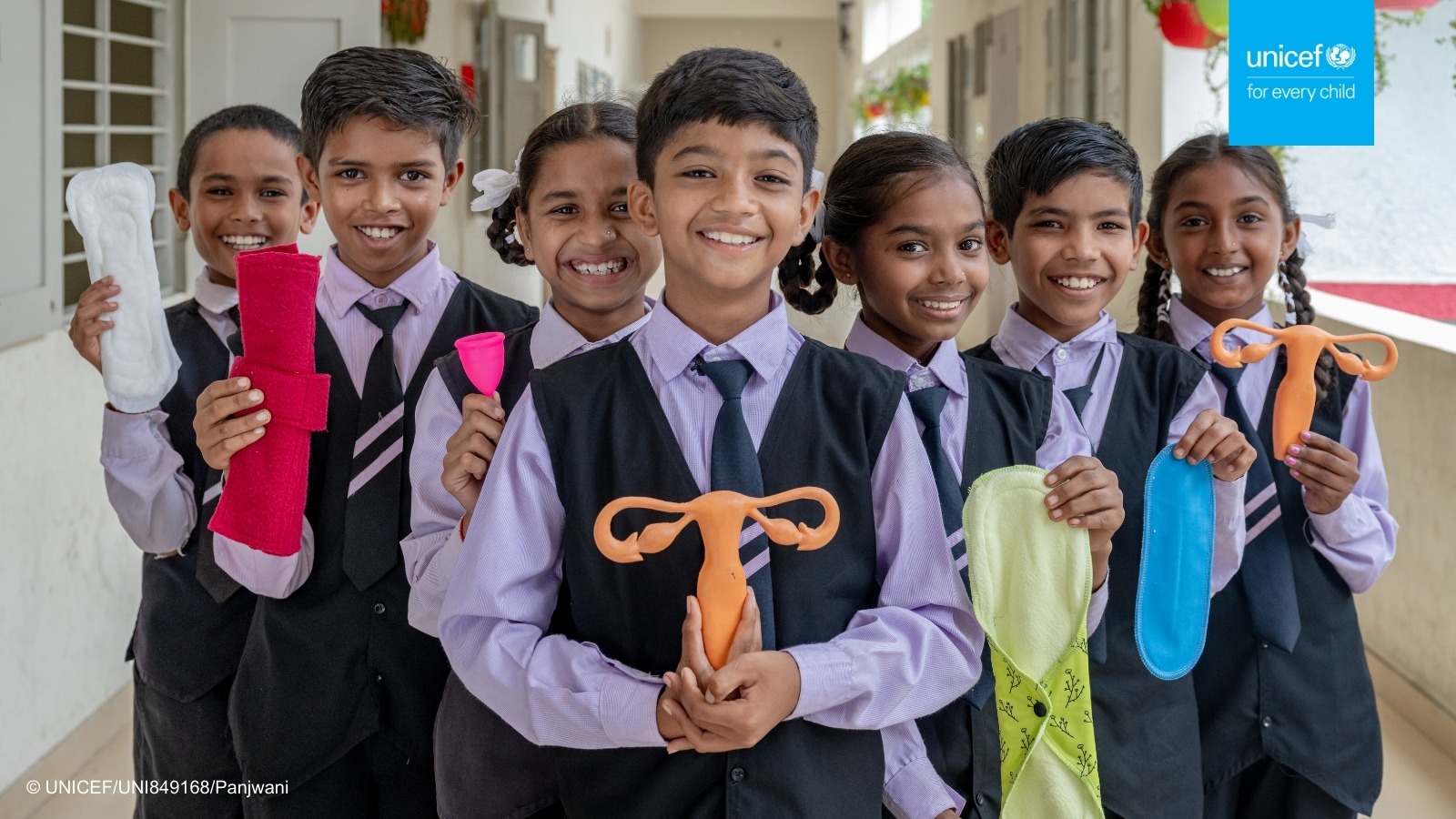
Making GTE the Centre Of Education
Representing the UN Girls’ Education Initiative (UNGEI), Natasha Harris-Harb, Lead for Youth Movements and Feminist Leadership, argued that cutting gender equality work in times of crisis is not only a moral mistake, but a poor investment decision. Drawing on evidence from the Feminist Network for Gender Transformative Education and the Gender at the Centre Initiative, she showed that GTE has strong “multiplier effects” such as improved learning, health, and well-being; lower rates of early and forced marriage; increased economic participation; and reduced violence and conflict, all of which carry significant social and economic returns.
Government and multilateral perspectives, including contributions from Mozambique’s National Directorate of School Health and Transversal Issues and from Sally Gear, Practice Lead for Gender Equality and Inclusion at the Global Partnership for Education (GPE), reinforced the need to move from projects to system-wide, multi‑year reforms. This means protecting and expanding education budgets, embedding GTE in sector plans, bringing feminist and youth movements into policy dialogue, and strengthening intersectional data and accountability so that financing decisions are grounded in lived realities.
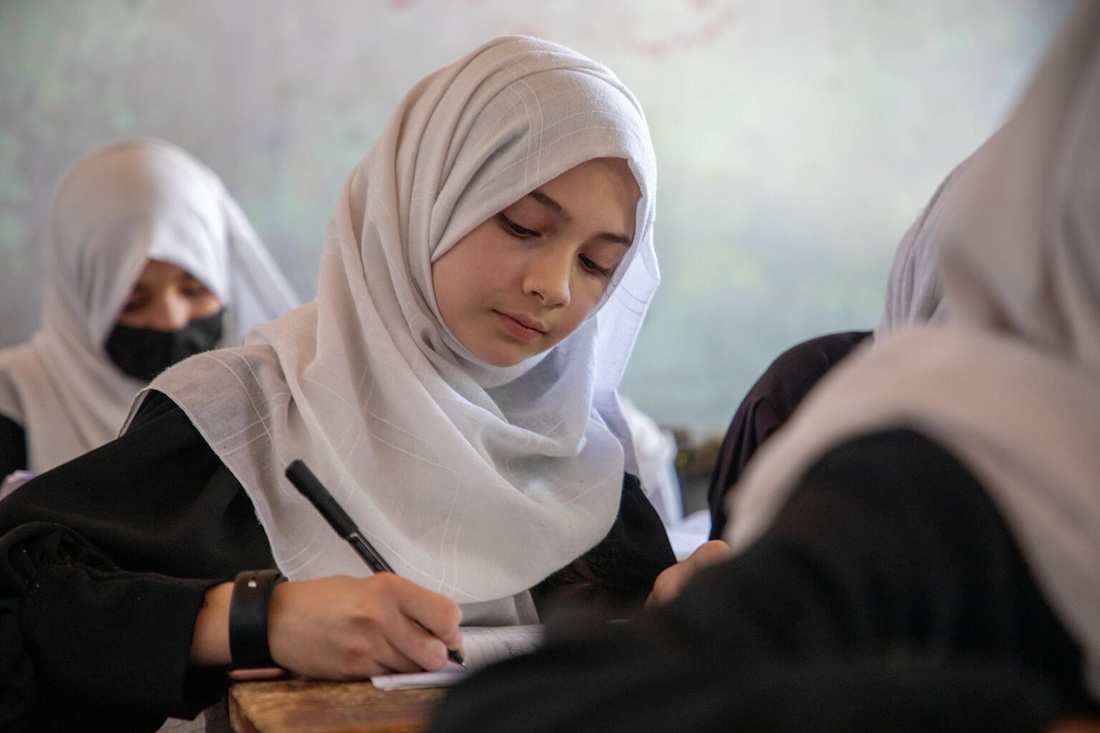
A Collective Agenda
In the closing segment, Susmita Choudhury, GCE’s Gender and Social Inclusion Consultant, invited participants to name concrete steps their organisations can take over the next 24 months. Across regions and sectors, they converged on shared priorities including scaling up evidence-based budget advocacy that links financing to gendered outcomes; strengthening gender-responsive and gender-transformative budgeting; breaking silos between education, feminist and economic justice movements; elevating youth leadership in advocacy on education financing; and investing in communications that make GTE visible and compelling to decision-makers and the wider public.
The session ended with a strong affirmation of solidarity with women and girls living through war and occupation, whose rights to life, safety, and education are being violently denied. For GCE and its regional partners, CSW70 was an opportunity to insist that access to justice must include the right to well-financed, gender-transformative public education for all.